Anchorage Whale
A dead whale shows up on your beach. What do you do with the 40-ton carcass?
A fin whale washed ashore in Anchorage and was left there for months. Then a self-described ‘wacko’ museum director made a plan
Chandra Brown | Wed 10 Dec 2025 16.00 GMT
When a whale dies, its body descends to the bottom of the deep sea in a transformative phenomenon called a whale fall. A whale’s death jump-starts an explosion of life, enough to feed and sustain a deep-ocean ecosystem for decades.
There are a lot of ways whales can die. Migrating whales lose their way and, unable to find their way back from unfamiliar waters, are stranded. They can starve when prey disappears or fall to predators such as orcas. They become bycatch, tangled in fishing lines and nets. Mass whale deaths have been linked to marine heatwaves and the toxic algae blooms that follow.
And because of their enormous size – and the relentless rise in global ship traffic – whales are now especially vulnerable to ship strikes. An estimated 20,000 whales are fatally hit each year; sometimes a ship captain rolls into harbor unaware a 40-ton body is draped across their bow.
But whales can also wash ashore. What happens next depends on tide, weather and the creatures – human, avian, canine, scavenger – who share that coastline. Sometimes the dead whale becomes a problem, sometimes a spectacle, sometimes a question no one is ready to answer.
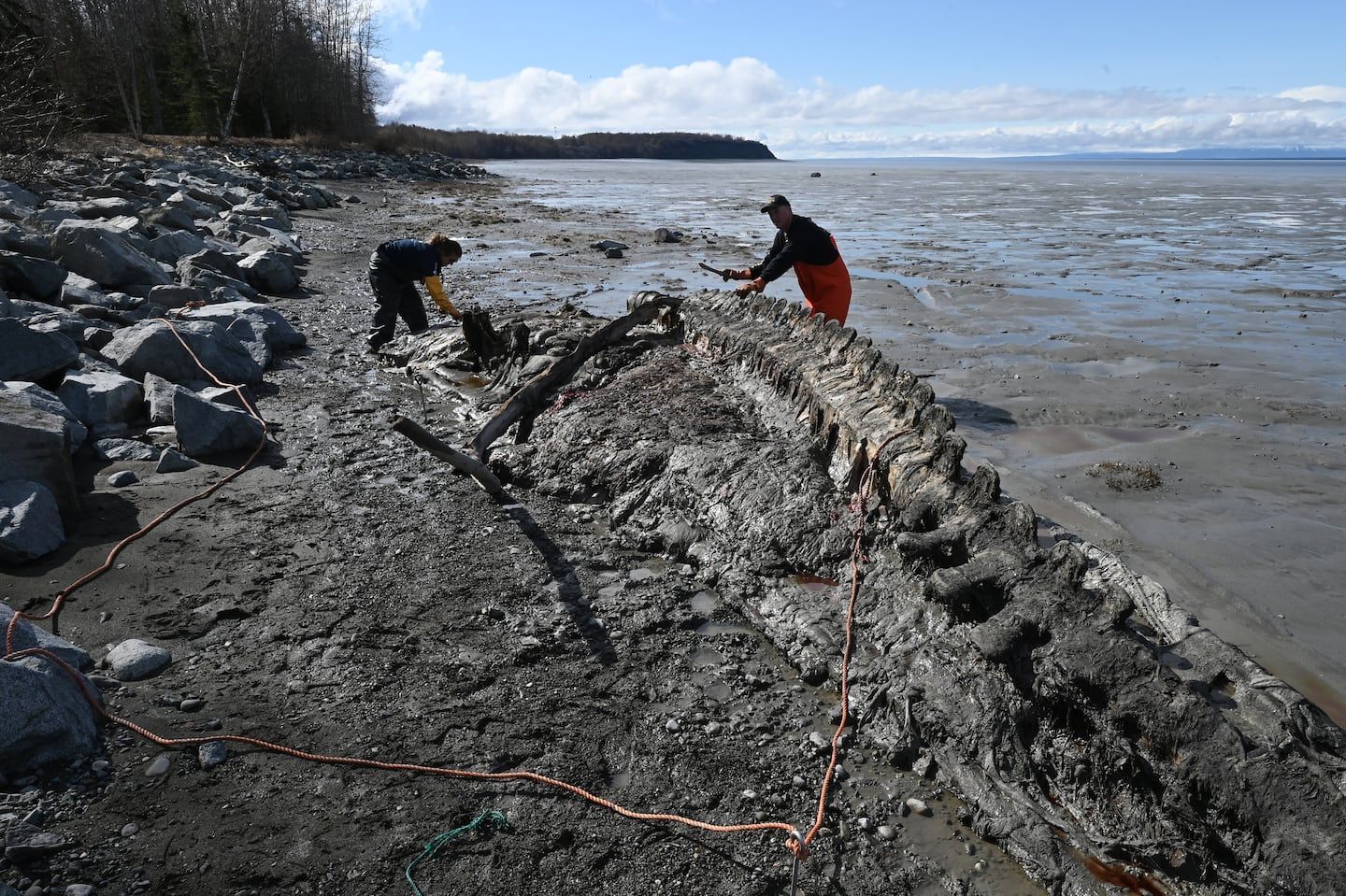
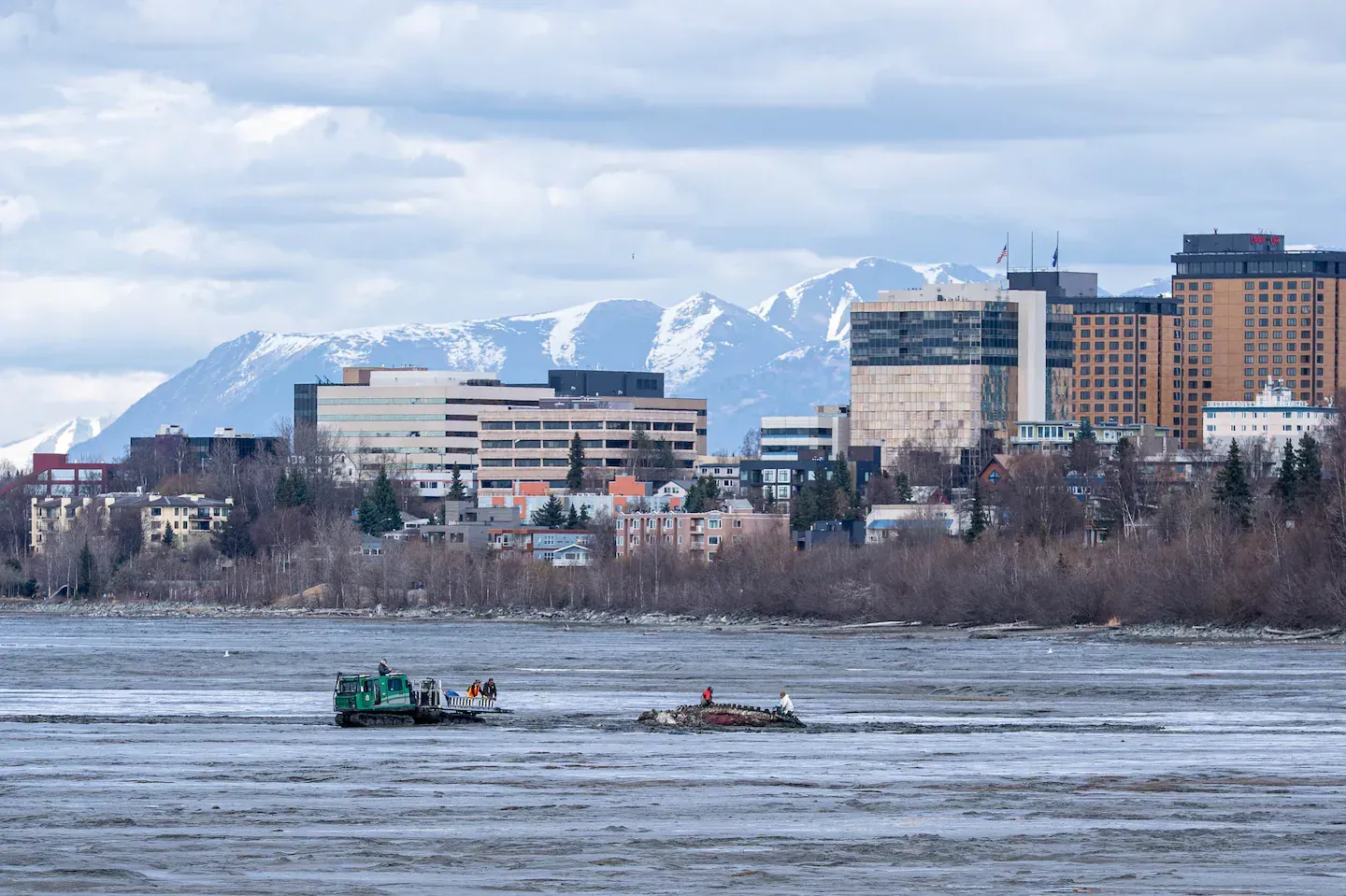
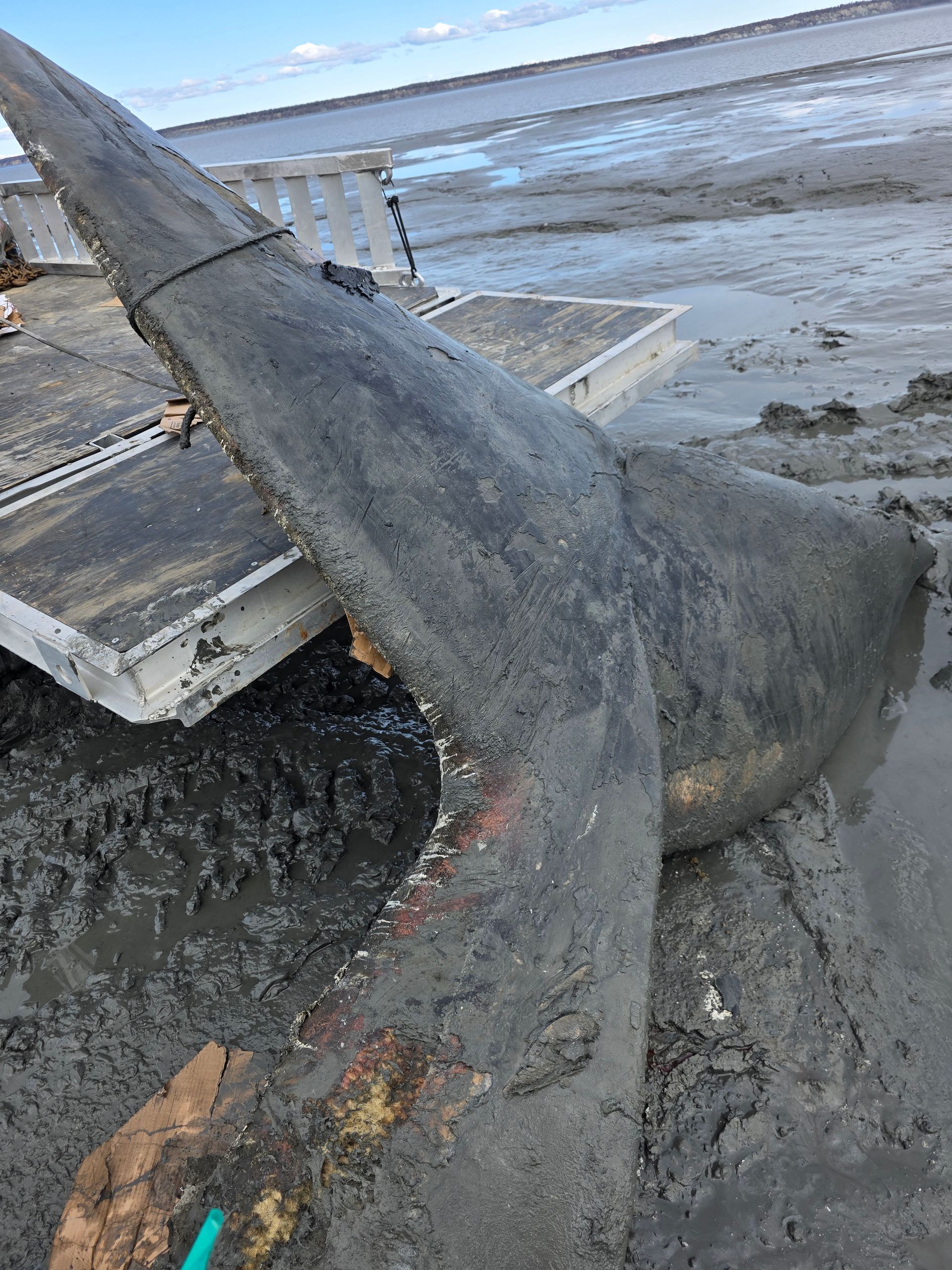
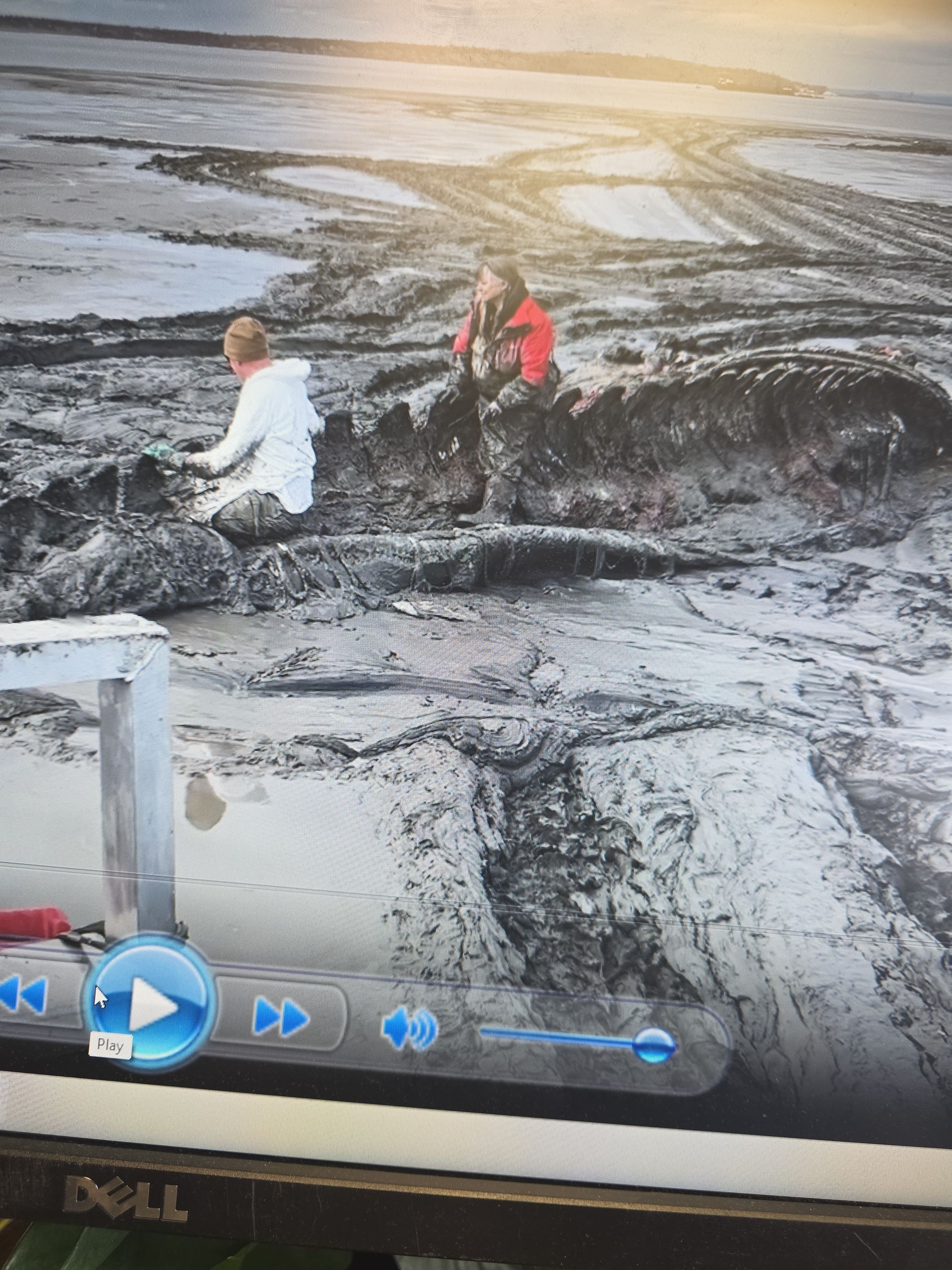
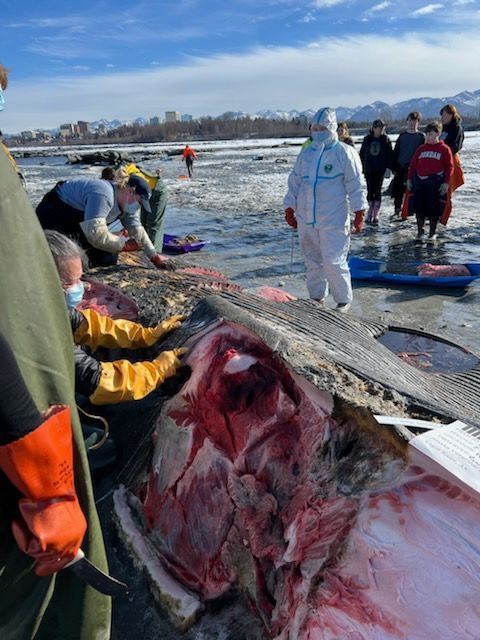
Last winter, one such death unfolded in Alaska, when a young fin whale washed up near downtown Anchorage and froze on to the tidal flats. The aftermath – months of fascination, bureaucratic drift and an unlikely retired air force pilot intent on giving her a second life – showed just how tangled our relationship to dead whales has become.
And Anchorage’s dilemma is part of a broader pattern: once a whale lands on shore, well, someone has to decide what happens to the body.
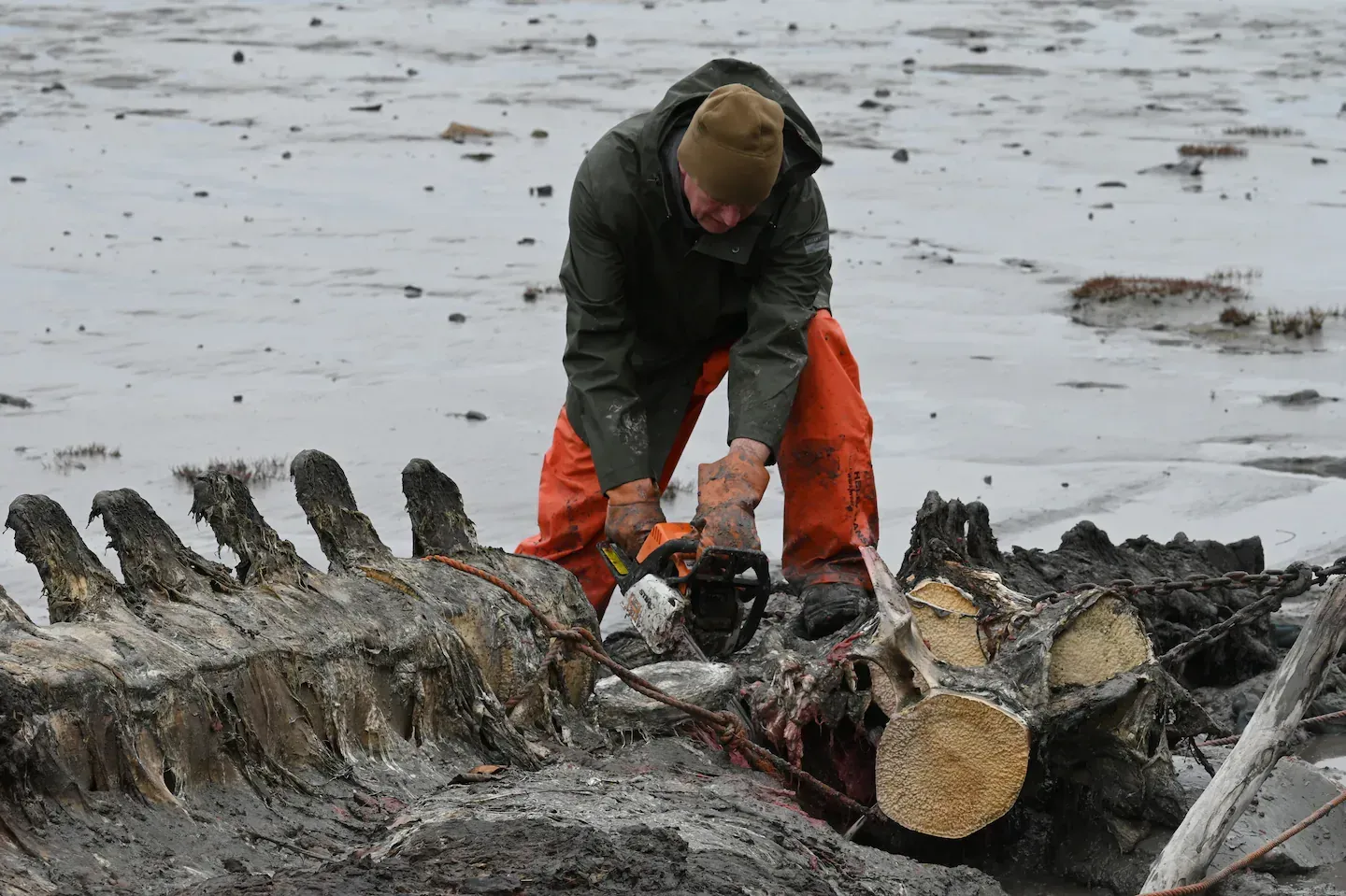
What it takes to harvest a whale
What is the difference between a fairy tale and a Pilots tale? A fairy tale starts off with "once upon a time." A pilots tale starts off with "No ____<kidding> this is a true story!!!"
So, for this "Fish" story (no Virginia, whales are mammals, not fish-stick with me!!) we all got notified about a 42' Fin whale in November of 2024 that washed up on the mud flats off of Anchorage. Someone at the Museum of Alaska Transportation and Industry (now Doing business as "the Museum of Alaska") got the brilliant thought "hey, wouldn't a whale be a great addition to our Museum!!!" And off we go!
New Paragraph